Der Beitrag Hamburg erschien zuerst auf Leopoldina.
]]>
Hamburg
On Thursday, June 16 2022, a small workshop within the EARI collaboration took place in Stockholm, at the Royal Swedish Academy of Sciences. The theme dealt with the topic of Neutrality and the European Academies of Sciences during the Cold War. Talks were given by Alice Oates from Scott Polar Research Institute, Cambridge about “The Royal Society, the International Geophysical Year (1957–58), and neutral science in Antarctica”. Johannes Feichtinger of the Austrian Academy of Sciences talked about “De-Provincializing Research in Austria: The Academy of Sciences, the State’s Neutrality Policy and Cold War”. Nils Hansson from Heinrich-Heine University in Düsseldorf talked about “Science Academies during the Cold War: Researchers from Sweden and the German Democratic Republic between science exchange and science diplomacy”. Finally Jenny Beckman of Uppsala University gave a talk about “Neutrality, Nobel, and non-colonialism: Redefining the roles of the Royal Swedish Academy of Sciences c. 1970”.
CONTACT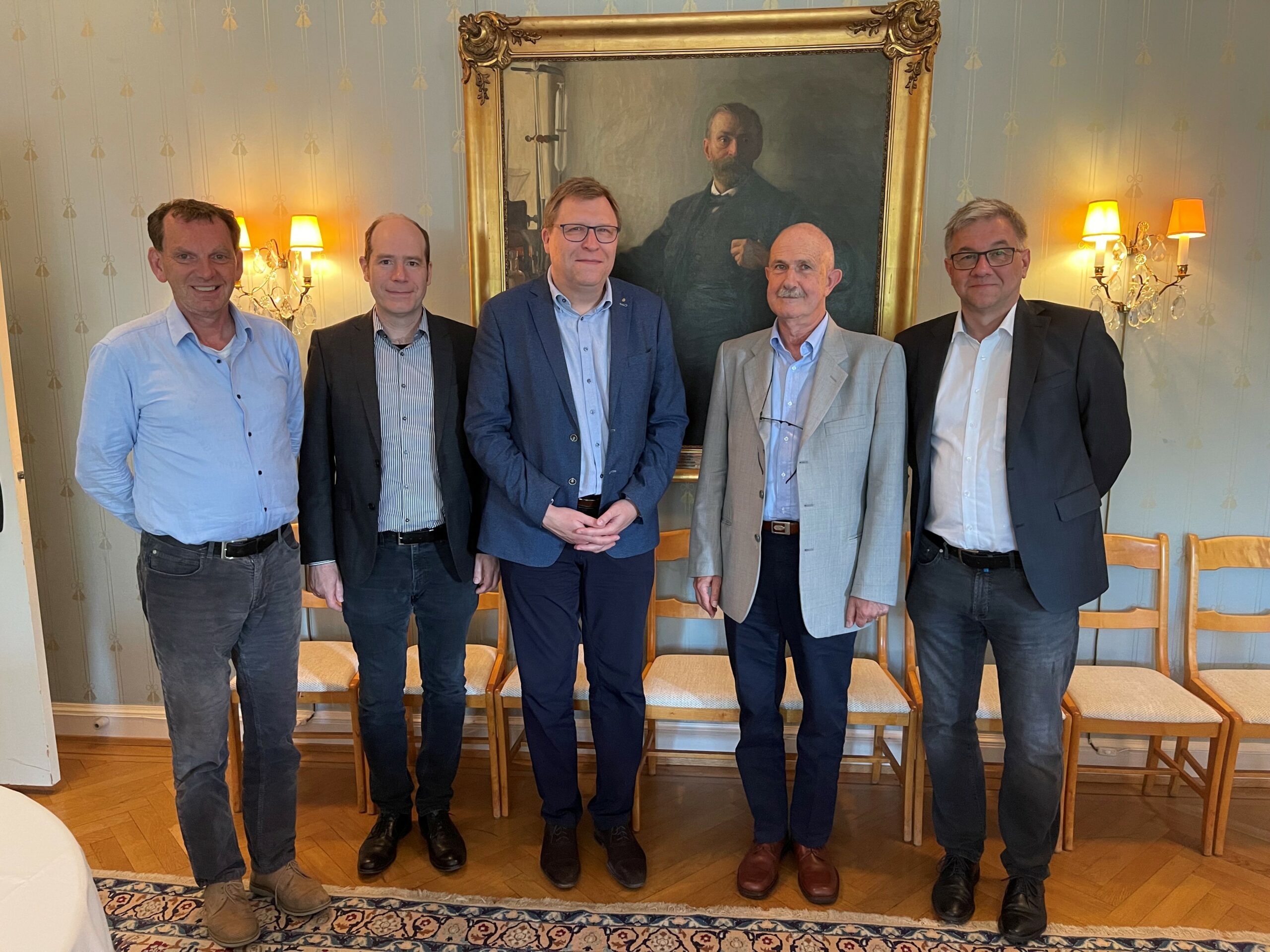
Members of the EARI group during the workshop in Stockholm at the Club Villa of the Academy in front of a painting of the great donor Alfred Nobel. LtoR: Feichtinger, Fangerau, Grandin, Paoloni, Godel.
Der Beitrag Hamburg erschien zuerst auf Leopoldina.
]]>Der Beitrag Vienna erschien zuerst auf Leopoldina.
]]>Developing Science Policy in occupied and liberated Europe, ca. 1930s–1960s
Is there a Nazi science policy and what does it consist of? How is it practiced in the occupied countries and how do national research systems emerge in Cold-War-Europe? The goal of the conference in Vienna was to provide an overview of the development of science policy in occupied and liberated Europe, ca. 1930s–1960s as a basis for comparison. The conference aimed at two perspectives of comparison – between the various occupied countries in Nazi Europe and between East and West in Cold-War-Europe.
Specific questions to be negotiated in the conference were: What changed in science and research in Nazi occupied Europe, what changed after liberation in communist and western-oriented countries? To what extent did central authorities of the German Reich pursue research and university policies in and for the occupied countries, and how did German authorities and institutions interact with local actors? To what extent are there differences between territories integrated into the Third Reich and occupied territories? Did local actors set themselves research initiatives?
Who determined what was researched? Which research was funded, which was not? What role did the Academies of Sciences play, which other institutions were doing research in occupied Europe? How was science (re)organized and funded after liberation? Did the research system in individual countries benefit from the Cold War, and how? How did national research systems emerge in Cold-War-Europe (including both the communist and the OECD member countries)?
Unterschrift des BildesThe conference was hosted by the Austrian Academy of Sciences from Wednesday, 31 May to Friday, 2 June, 2023. The conference focused on Austria’s “Anschluss” and its influence on scientific organizations. The Nazification of universities and science policy in the occupied countries were also discussed. For the post-war period, breaks and continuities were identified and science policy and diplomacy in times of the Cold War were reviewed.
CONTACTDer Beitrag Vienna erschien zuerst auf Leopoldina.
]]>Der Beitrag Stockholm erschien zuerst auf Leopoldina.
]]>On Thursday, June 16 2022, a small workshop within the EARI collaboration took place in Stockholm, at the Royal Swedish Academy of Sciences. The theme dealt with the topic of Neutrality and the European Academies of Sciences during the Cold War. Talks were given by Alice Oates from Scott Polar Research Institute, Cambridge about “The Royal Society, the International Geophysical Year (1957–58), and neutral science in Antarctica”. Johannes Feichtinger of the Austrian Academy of Sciences talked about “De-Provincializing Research in Austria: The Academy of Sciences, the State’s Neutrality Policy and Cold War”. Nils Hansson from Heinrich-Heine University in Düsseldorf talked about “Science Academies during the Cold War: Researchers from Sweden and the German Democratic Republic between science exchange and science diplomacy”. Finally Jenny Beckman of Uppsala University gave a talk about “Neutrality, Nobel, and non-colonialism: Redefining the roles of the Royal Swedish Academy of Sciences c. 1970”.
CONTACTMembers of the EARI group during the workshop in Stockholm at the Club Villa of the Academy in front of a painting of the great donor Alfred Nobel. LtoR: Feichtinger, Fangerau, Grandin, Paoloni, Godel.
Der Beitrag Stockholm erschien zuerst auf Leopoldina.
]]>